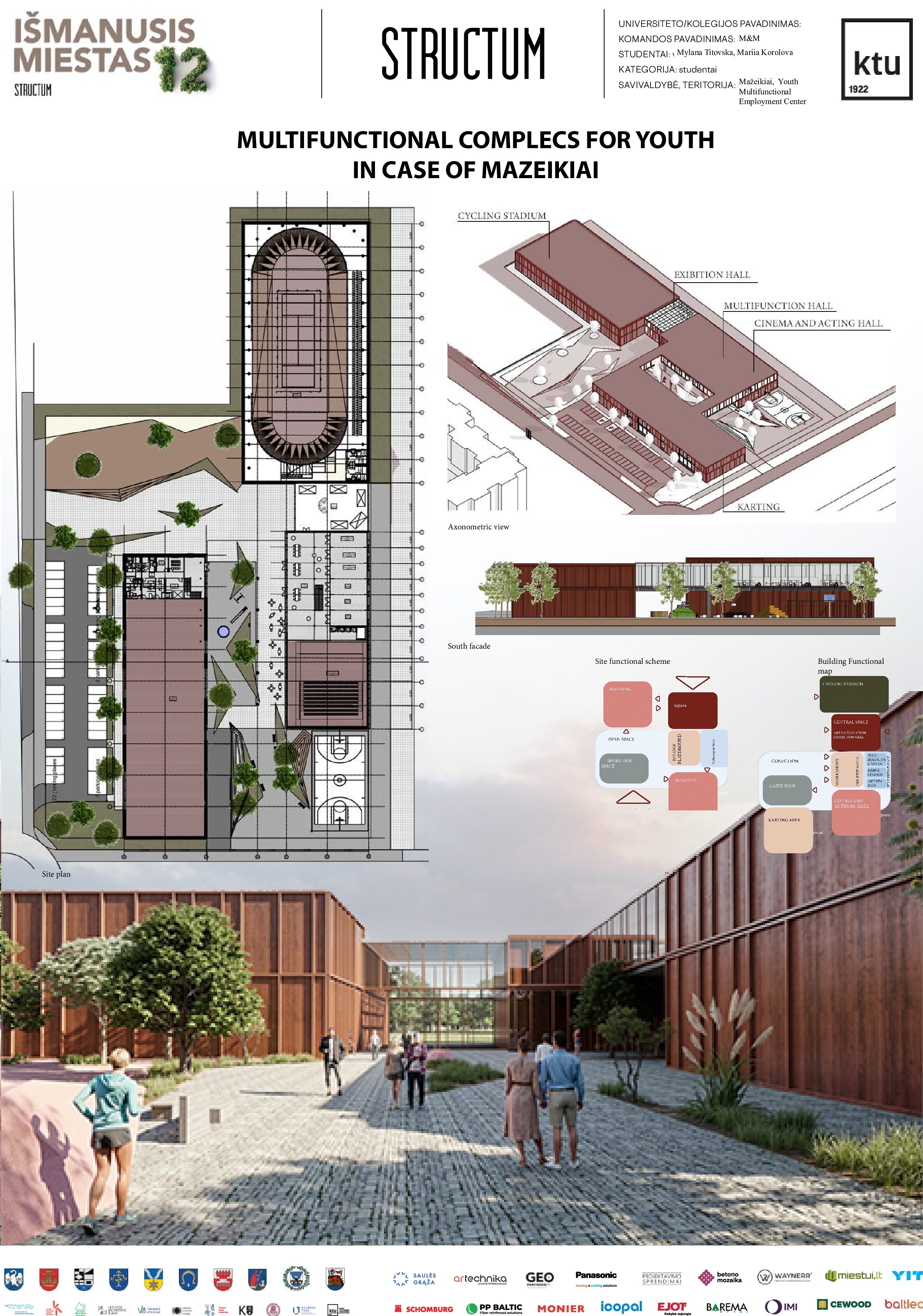

The project for a multifunctional youth center in Mažeikiai aims to create a new public space tailored to the contemporary needs of young people and the development of the city’s social environment. The project’s primary objective is to create an open, flexible, and multifunctional architectural structure capable of bringing together various scenarios for interaction, recreation, sports, education, and creativity. The project views architecture not only as a physical environment but also as a tool for fostering social connections and urban activity.
The selected site is located at the intersection of residential and public development, ensuring the facility’s seamless integration into the existing urban fabric. An analysis of the area revealed a well-developed transportation and pedestrian infrastructure but identified a lack of modern spaces for adolescents and young adults aged 16 to 29. Existing cultural and educational institutions fulfill an important social function but do not provide sufficient flexibility, technical equipment, or a variety of formats for today’s youth. In this regard, the project proposes the creation of a new center capable of becoming a focal point and a catalyst for urban activity.
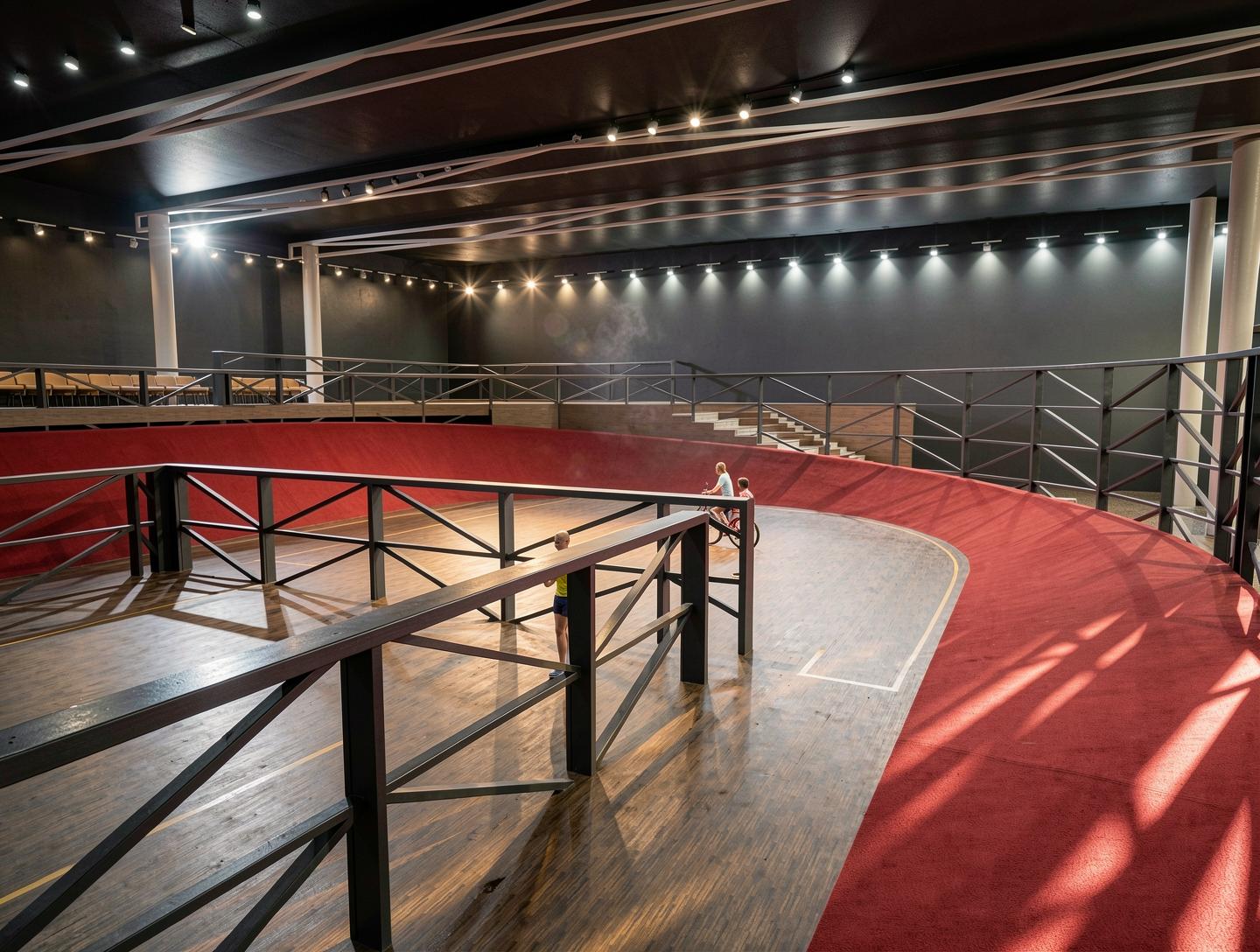
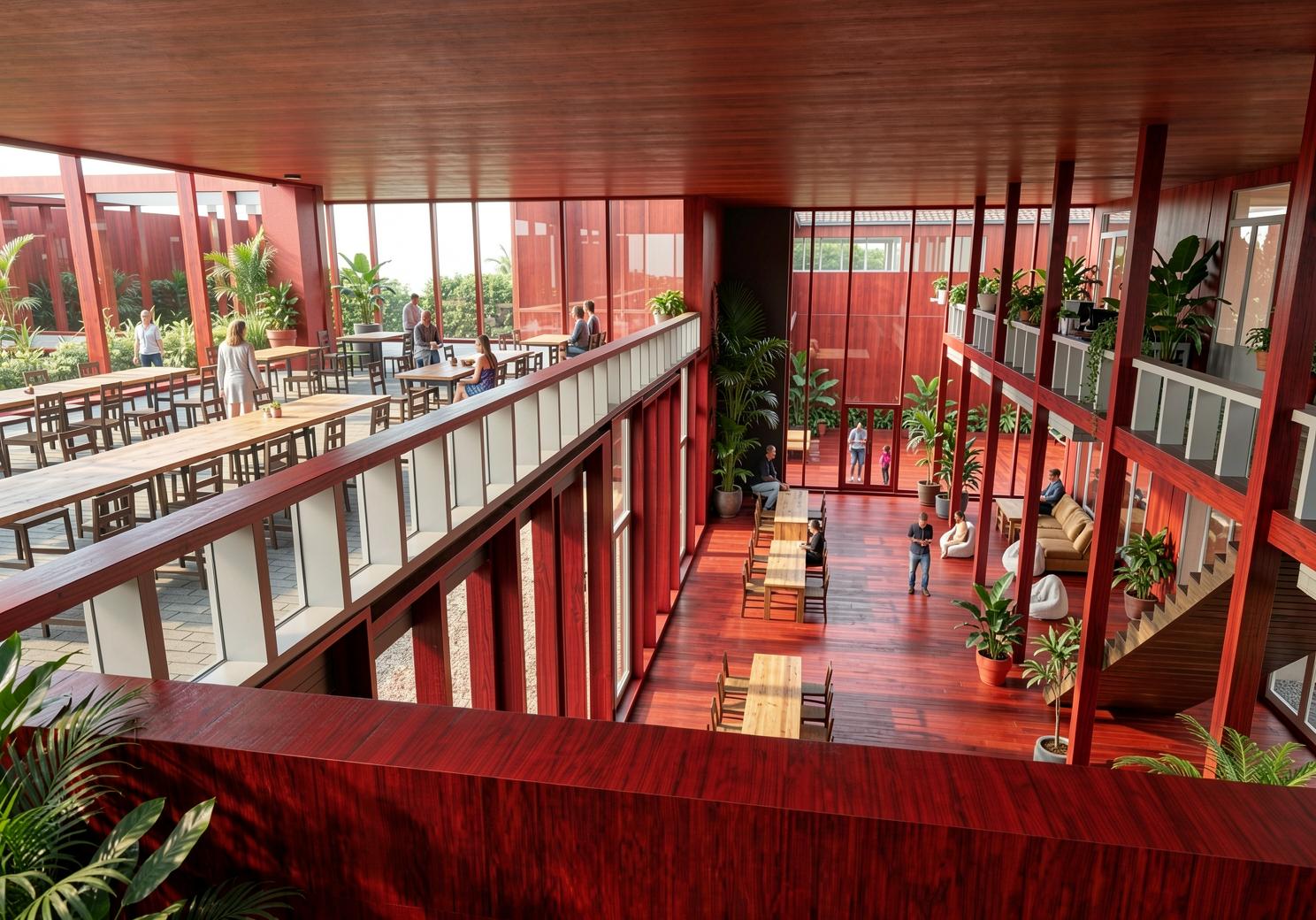
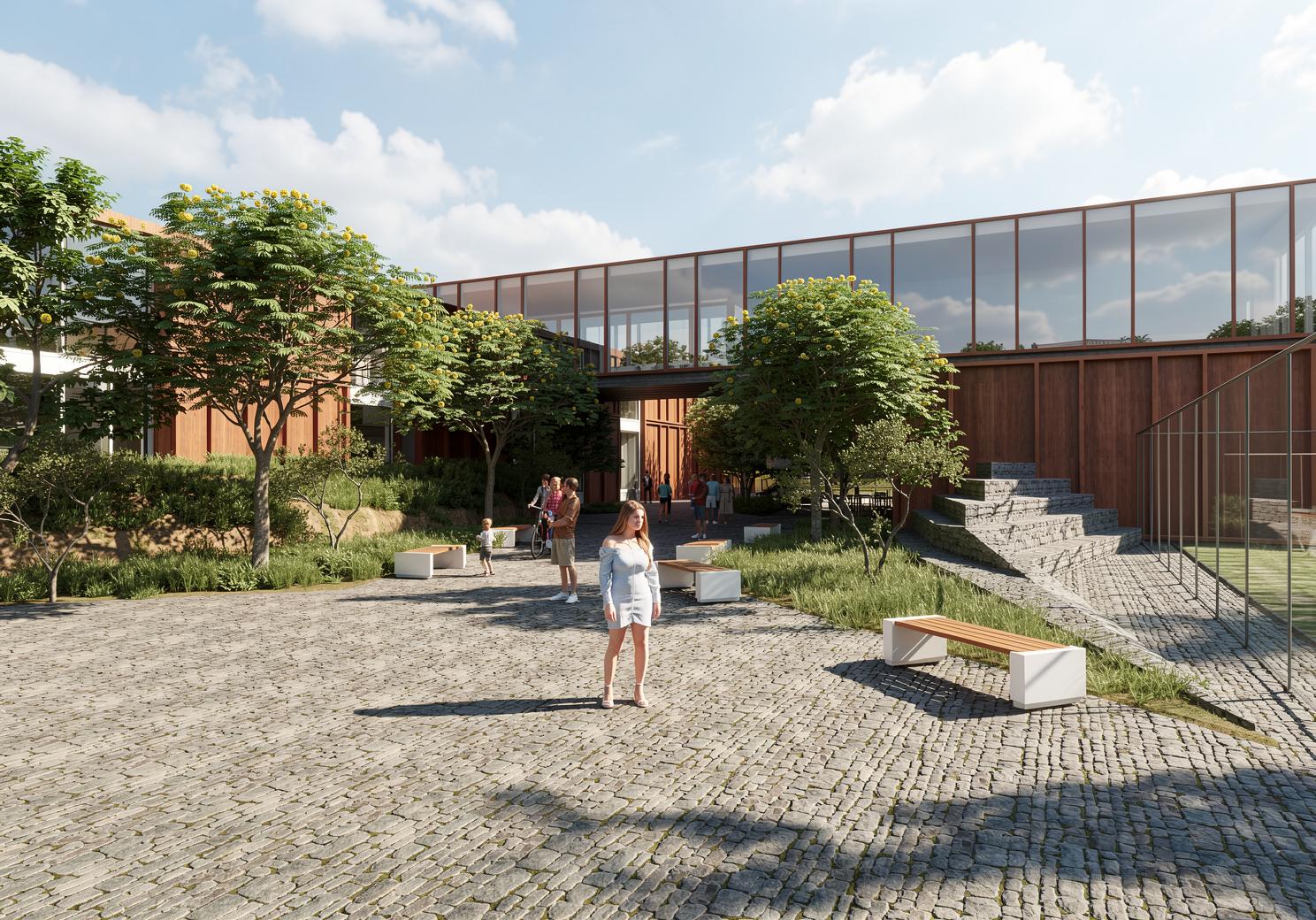
The architectural concept is based on the principle of integrating dynamic and tranquil functional zones into a unified spatial system. The building’s composition consists of several volumes, between which an open public space is created, featuring pedestrian routes, gathering areas, and spaces for temporary events. The spatial organization of the center is built around a public core that connects sports, educational, cultural, and recreational functions. The complex includes an indoor velodrome, a go-karting area, a cinema and auditorium, exhibition spaces, art and dance studios, technology labs, a coworking space, a café, and public areas.
Particular attention is paid to the flexibility of the space and the ability to adapt the premises to various usage scenarios. The project is focused on creating an environment in which young people can independently shape ways of interacting and using the space. Open public areas serve as an extension of the building’s internal functions and provide a visual and functional connection between all elements of the complex
The building’s architectural character is shaped by a combination of solid wooden volumes and transparent glass facades. Natural wood was chosen as the primary facade material, emphasizing the project’s ecological focus and creating a warm, tactile, and comfortable environment. The vertical rhythm of the wooden panels creates an expressive, sculptural composition, while the transparent facade inserts provide visual openness and connect the interior spaces with the surrounding urban environment.
The project’s engineering and structural solutions are based on the principles of sustainable development and energy efficiency. The building features geothermal heating systems, ventilation with heat recovery, solar panels, rainwater harvesting systems, and smart control of utility networks. The use of eco-friendly materials, energy-efficient structures, and modern engineering technologies allows for the creation of a sustainable public facility that meets contemporary requirements for safety, comfort, and environmental sustainability.
Projekto autoriai: Mylana Titovska, Mariia Korolova (M&M)
Darbo vadovas: Laura Jankauskaitė-Jurevičienė (KTU)